
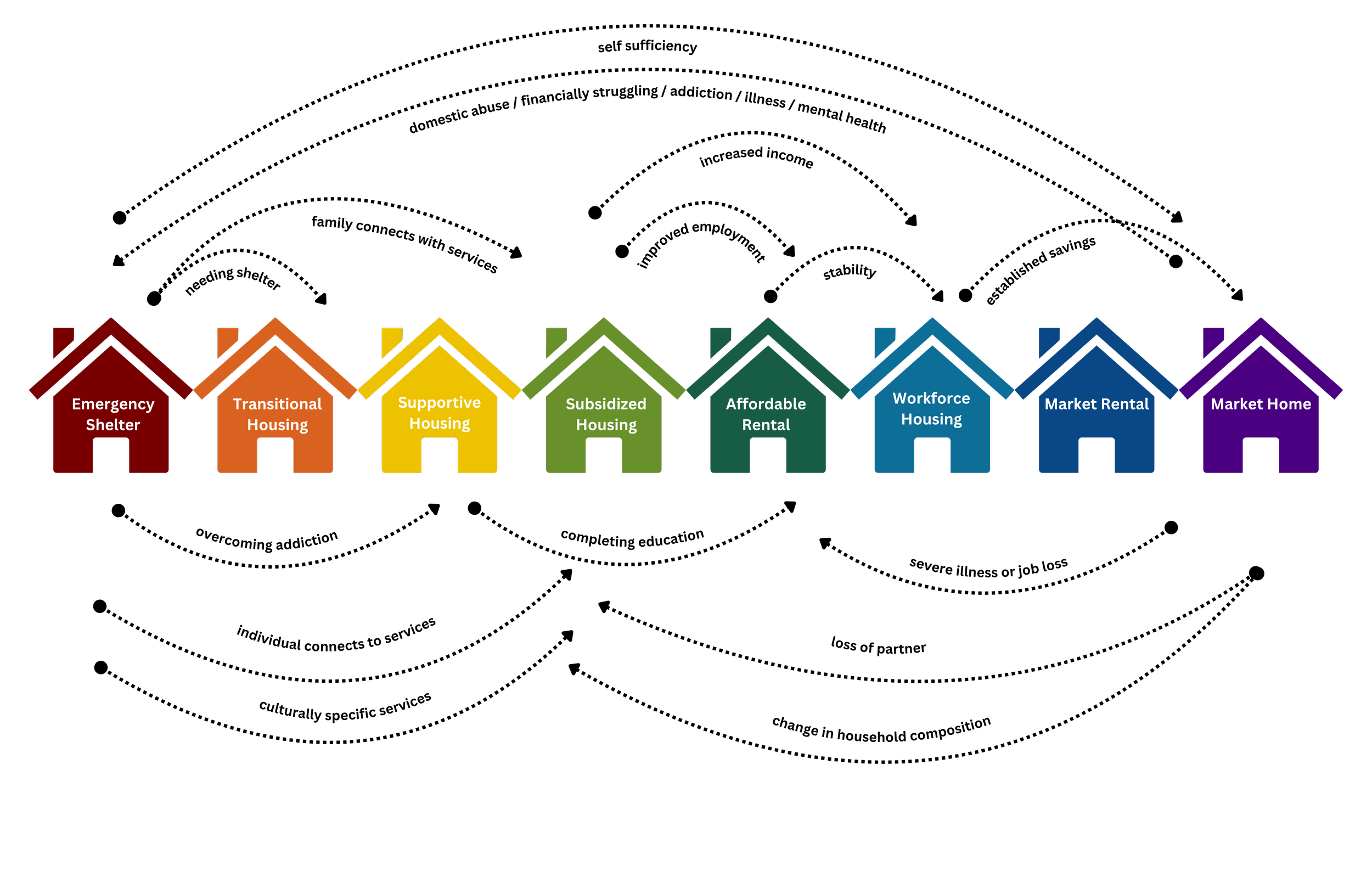
How SPARC Works
Key Components of SPARC
-
By connecting partners in the network shelter beds can lead directly to housing opportunities, ensuring a seamless transition to permanent housing.
-
Integrating supportive services with shelters & housing opportunities embeds mental health, addiction recovery, employment readiness, and case management services within housing developments.
-
We create sustainable housing opportunities for Southern Oregon Coast communities using unique solutions:
Utilizing Community Land Trusts (CLTs) to preserve long-term affordability and create home ownership pathways.
Incorporate innovative funding models blending public, private, and philanthropic resources.
-
Central “hubs” provide shelter and coordination while “spoke” sites extend services to rural areas through mobile outreach and local partnerships.
-
We use tools like the Homeless Management Information System (HMIS) for outcome tracking and to leverage for resource allocation. Bringing boots-on-the-ground organizations more opportunity by advocating for the region as a whole.
SPARC Goals
-
By establishing a direct pipeline from shelter beds to permanent housing, SPARC will ensure that homelessness is rare, brief, and non-recurring to achieve Functional Zero.
-
Addressing critical housing shortages along Oregon’s South Coast by increasing the availability of affordable and workforce housing units through sustainable development practices.
-
By embedding mental health, addiction recovery, employment readiness, and family support services into housing developments, SPARC can support its network by tackling root causes of housing instability.
-
Uniting housing authorities, CAP agencies, healthcare providers, nonprofits, and local governments to align resources will increase capacity and streamline service delivery.
-
By supporting workforce housing to stabilize local economies, reduce employee turnover, and enhance regional growth.
-
Develop a replicable model for rural communities that integrates shelter, housing, and services into a cohesive system of care.
-
Addressing social determinants of health by providing stable housing coupled with access to healthcare and behavioral services, improves overall community well-being.
Interested in learning more about the SPARC Model?
Support the Author: Matt Vorderstrasse